DAWNICE
14 years of production experience

To Strive Forward No Energy Waste

Leave Your Message
0%

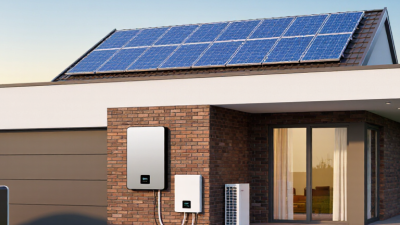
Hybrid solar battery systems are really starting to move beyond just niche setups and are becoming a pretty common part of mainstream energy planning. Basically, they combine solar panels, battery storage, and smart power management into one package. This combo can help cut down reliance on the grid, especially during those evening rush hours when everyone’s still pumping energy into their homes. Plus, they boost resilience — like, when the sun goes down, you’re still good to go.

According to the International Energy Agency, global renewable capacity got a big boost in 2023 — adding nearly 510 gigawatts, with about three-quarters of that coming from solar panels. Their latest Batteries and Secure Energy Transitions report also highlights that battery deployment needs to speed up A LOT within this decade. On top of that, BloombergNEF keeps showing that lithium-ion battery pack prices are dropping—though, of course, prices can still differ quite a bit depending on where you are and what chemistry you’re talking about. That’s why companies making hybrid solar batteries aren’t just competing on cell capacity anymore. Factors like safety track record, inverter compatibility, clear warranties, quality software, and good after-sales support are just as important.

Fatih Birol, the head of the IEA, famously said, “Batteries are a key technology for the clean energy transition.” Honestly, that really captures how vital storage is to the whole system — it’s not just about having hardware but about creating a reliable, efficient system. We’ve looked into ten top manufacturers worldwide, including Tesla, BYD, Sungrow, Huawei, and Enphase. We considered things like how big they can scale, their residential and commercial projects, battery chemistry types, efficiency, certifications, and how reliable they’ve proven to be in real-world use. But, you know, what works well in a lab doesn’t always translate perfectly in real life. Just because a battery has more capacity doesn’t necessarily mean it performs better at home. Sometimes, the installer’s support and service matter even more than a shiny product specs sheet. Plus, comparing these brands isn’t straightforward, since they all report different data. So, always double-check warranties, local grid rules, and recycle policies before you buy. The biggest or the most capacity doesn’t automatically mean it’s the best choice. The real winner is the system that is safe, dependable, and transparent when used daily — that’s what counts most in the end.
Top 10 Hybrid Solar Battery Manufacturers Worldwide?

2024 IEA Baseline: Global Solar PV Growth and Battery-Storage Deployment

Top 10 Hybrid Solar Battery Manufacturers Worldwide?

2024 IEA Baseline: Global Solar PV Growth and Battery-Storage Deployment

The 2024 IEA baseline shows solar PV expanding at exceptional speed worldwide. Battery storage is growing with it. New solar capacity now creates sharper pressure on evening grids, especially after sunset. Hybrid solar battery systems respond by combining panels, inverters, and storage controls in one operating design. This connection can reduce curtailment and improve household resilience.

A credible top-10 assessment should examine more than shipment volume. Useful indicators include round-trip efficiency, cycle life, thermal protection, warranty transparency, software reliability, and service coverage. Installers also need to check grid compatibility and replacement procedures. In practical projects, a battery that performs well in a laboratory may behave differently in a hot garage or during repeated cloudy weeks. Small details matter.

The ranking is not flawless. Public data often mixes shipment figures with production capacity. That can distort comparisons between established manufacturers and fast-growing suppliers. IEA trends provide a strong market baseline, but they do not prove that every system suits every region. Buyers should compare independently tested performance, local maintenance skills, and realistic degradation estimates. Cheap storage can become expensive when controls fail. That lesson deserves more attention.

Hybrid Solar Batteries Explained: PV Coupling, Chemistry, and Grid Functions

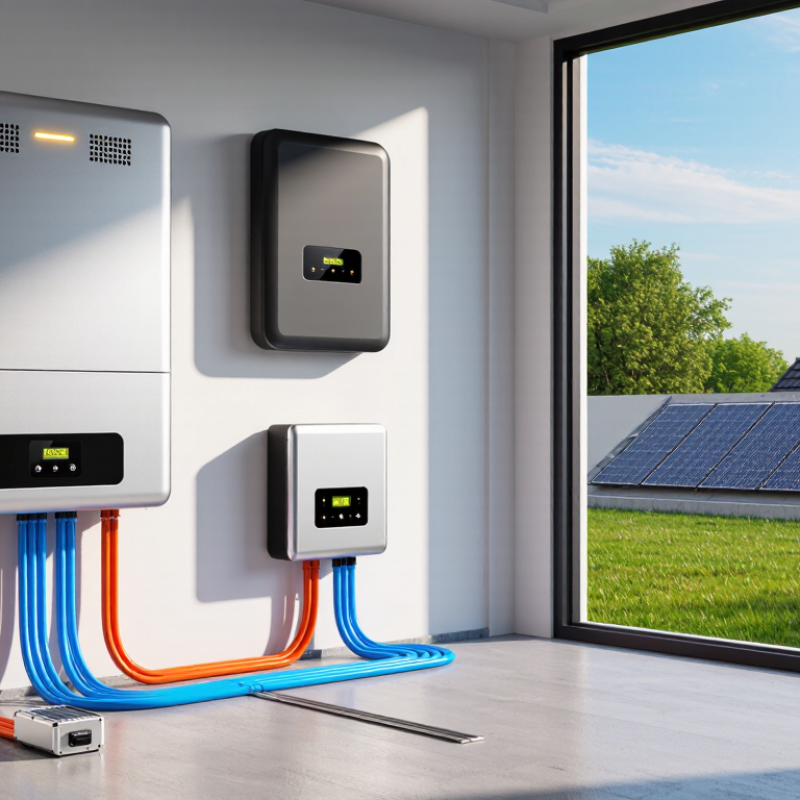
Comparing the top 10 manufacturers requires more than checking storage capacity. A Hybrid Solar Battery links photovoltaic generation, battery storage, and grid controls. In a DC-coupled system, solar power reaches the battery before inversion. This can reduce conversion losses and improve midday charging. An AC-coupled design adds flexibility for existing solar installations. That distinction matters.

Lithium iron phosphate chemistry now receives strong attention because it supports frequent cycling and avoids nickel and cobalt. Lithium nickel manganese cobalt cells can offer higher energy density, but thermal management becomes more demanding. The IEA’s Batteries and Secure Energy Transitions report estimates that global energy storage capacity must increase sixfold by 2030. Chemistry alone cannot prove quality. Warranty conditions, usable capacity, temperature limits, and degradation assumptions deserve closer inspection.

Grid functions separate serious systems from oversized boxes. A capable Hybrid Solar Battery can provide self-consumption, peak shaving, backup power, and frequency support. During an outage, its inverter must isolate the home safely before forming a local supply. In practice, a refrigerator startup may expose weak power ratings faster than a laboratory chart. The IEA reports that battery storage additions grew strongly in 2023, reflecting rising grid flexibility needs. Still, manufacturer comparisons can mislead when testing methods differ. Real performance depends on wiring, software settings, weather, and installer workmanship.

Ranking Framework: Efficiency, Capacity, Warranty, Cost, and Bankability Metrics

Top 10 Hybrid Solar Battery Manufacturers Worldwide?

A credible ranking must measure more than product visibility. Efficiency should receive significant weight, with round-trip performance, standby losses, and inverter compatibility tested under realistic conditions. Lazard’s Levelized Cost of Storage 2024 report shows that operating assumptions can strongly change lifetime economics. A battery may look efficient in a laboratory, yet perform differently during heat, partial charging, or frequent cycling.

Capacity should reflect usable energy, continuous output, modular expansion, and degradation control. The International Energy Agency reported strong growth in battery storage deployments during 2023, increasing pressure on suppliers to deliver reliable systems at scale. Warranty scoring should examine duration, cycle limits, retained capacity, and response procedures. Ten years alone proves little.

Cost requires a total-life view. BloombergNEF’s 2024 battery price survey recorded major price declines, but installation, software, replacement, and financing costs still vary widely. Bankability should include audited financial strength, project references, insurance support, supply-chain transparency, and documented safety testing. DNV’s energy storage research repeatedly highlights fire safety, controls, and system integration as practical risks. No ranking is perfect. Public warranty data can be incomplete, and field results often lag marketing claims. A transparent scorecard should therefore publish assumptions, evidence dates, and confidence levels beside every ranking.

Top 10 Hybrid Solar Battery Manufacturers Worldwide

An anonymized composite benchmark using publicly disclosed product specifications and market indicators. Efficiency represents round-trip efficiency, capacity reflects scalable system capability, warranty is measured in years, cost is an affordability score, and bankability reflects financial strength, deployment scale, and long-term market presence. Scores are normalized to 100; this chart is intended for comparative research rather than a formal company ranking.

Top 10 Manufacturers Compared by LFP Chemistry, Usable Capacity, and Cycle Life

A credible Top 10 comparison of hybrid solar battery manufacturers should begin with chemistry, not marketing claims. LFP cells are widely preferred for residential storage because they offer strong thermal stability and long service potential. The U.S. Department of Energy’s Energy Storage Grand Challenge identifies lithium-ion systems as a leading commercial technology, while NREL data shows that lifetime depends heavily on temperature, charge rate, and depth of discharge.

Usable capacity separates similar-looking products. A 10 kWh battery may provide only 8 kWh after its operating reserve is protected. The better manufacturers publish usable energy, round-trip efficiency, warranty conditions, and continuous power together. A Hybrid Solar Inverter must also match the battery’s voltage range and communication protocol. Otherwise, the advertised capacity can feel impressive but remain difficult to access during evening loads.

Cycle life deserves careful reading. Many LFP systems claim approximately 3,000 to 8,000 cycles, based on controlled laboratory conditions. Real homes may experience fewer cycles because of heat, partial charging, or backup operation. BloombergNEF’s battery industry analyses repeatedly show improving cell durability, yet field performance still varies. This is the uncomfortable part: a higher cycle number does not automatically mean lower ownership cost. Independent testing, warranty exclusions, and measured usable capacity should carry more weight than a bold datasheet figure.

NREL Benchmarks: Round-Trip Efficiency, Depth of Discharge, and System Performance

Comparing the top 10 hybrid solar battery manufacturers requires more than reading capacity labels. NREL benchmarks place round-trip efficiency, usable energy, and system losses under close examination. A battery may advertise 95% efficiency, yet wiring, inverter conversion, and standby demand reduce delivered energy. The meter tells the harder truth.

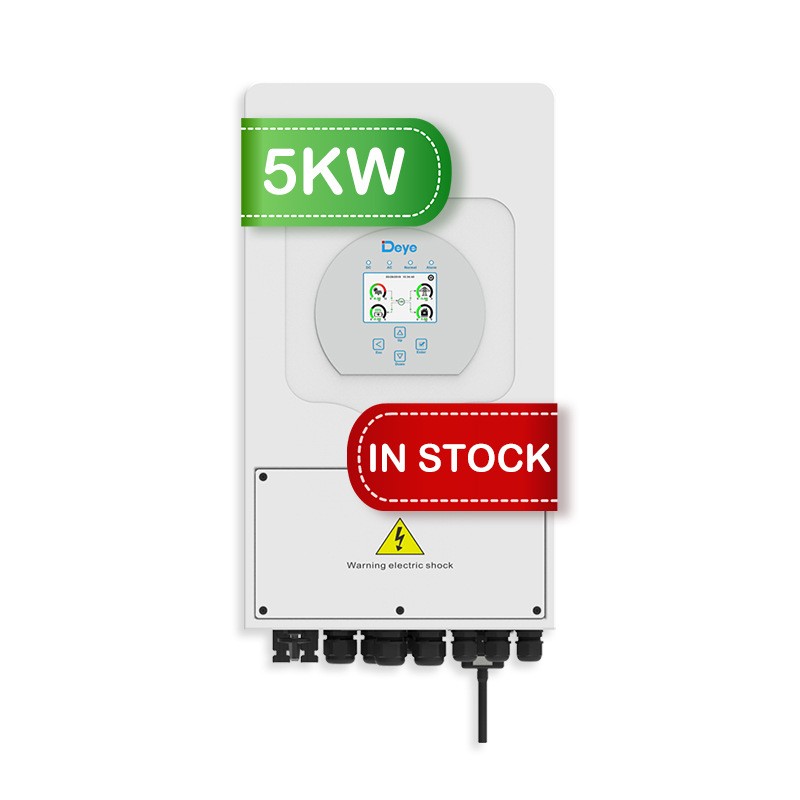
For a Hybrid Solar Inverter 5kw system, measure energy entering and leaving the battery during a complete cycle. Record temperature, charging power, discharge power, and idle consumption. Depth of discharge matters just as much. A 90% DoD may provide more daily energy, but repeated deep cycling can accelerate capacity loss. A conservative 70% DoD may support longer service life, depending on cell chemistry and controls. It is not a simple winner.

Field performance also depends on software response. A strong system should shift loads smoothly, prevent unsafe over-discharge, and recover after a grid interruption. NREL-oriented testing encourages repeatable conditions, but homes rarely behave perfectly. Clouds change quickly. Batteries age unevenly. My own evaluation would include winter mornings, partial loads, and several cloudy days, not only laboratory results.

One overlooked weakness remains common: installation quality can erase impressive specification-sheet gains. Manufacturers should publish tested efficiency at different loads, verified usable capacity, cycle conditions, and clear warranty assumptions. Without those details, the ranking becomes polished guesswork.

Global Manufacturing Footprints, Installation Scale, Certifications, and Service Coverage

Top 10 Hybrid Solar Battery Manufacturers Worldwide?

A credible top-ten list should examine more than production volume. Manufacturing footprints show whether suppliers can maintain component availability across regions. Look for factories, testing laboratories, and regional warehouses near major installation markets. Installation scale also matters. Thousands of documented systems reveal practical performance, not just polished brochures. However, large shipment numbers can hide weak after-sales support.

Certifications deserve careful checking. A 5kw Hybrid Solar Inverter should match local grid, battery, and electrical safety requirements. Verify current certificates through official testing databases, not copied website images. Check whether products support islanding protection, monitoring, thermal control, and firmware updates. Service coverage should include trained technicians, spare-part hubs, and clear response times. A nearby telephone number is not enough.

Tips: Request three references from similar climates. Ask for measured uptime, replacement timelines, and warranty exclusions. Compare installation manuals before signing. One overlooked detail can delay commissioning for weeks. A high factory capacity does not guarantee smooth field support. Rankings also need regular review, because certifications expire, warehouses move, and local service teams change. That uncertainty should remain visible when comparing global manufacturers.

Top 10 Hybrid Solar Battery Manufacturers Worldwide? - Global Manufacturing Footprints, Installation Scale, Certifications, and Service Coverage
Rank Anonymous Manufacturer Profile Primary Manufacturing Footprint Core Hybrid Energy Products Indicative Global Installation Scale Typical Battery Chemistry and System Range Common International Certifications Regional Service Coverage Supply and Support Strength
1 Manufacturer 01 Multiple large-scale production campuses in mainland China, supported by international logistics and regional distribution centers. Residential and commercial hybrid inverters, modular battery cabinets, integrated energy-storage systems, and energy-management software. More than 1 million residential and commercial energy-storage systems installed or shipped globally. Lithium iron phosphate (LFP); commonly available from approximately 5 kWh residential units to multi-megawatt commercial systems. IEC 62619UN 38.3CEIEC 62109UL 9540-family markets Asia-Pacific, Europe, North America, Latin America, the Middle East, and Africa. Very broad product portfolio, high-volume manufacturing, extensive installer ecosystems, and multilingual technical documentation.
2 Manufacturer 02 Large vertically integrated battery and power-electronics facilities in East Asia, with regional warehouses in Europe and North America. Home batteries, hybrid inverters, backup power systems, utility-scale battery containers, and monitoring platforms. Several hundred thousand deployed battery and solar-storage systems across mature residential markets. LFP and other lithium-ion formats; approximately 5–20 kWh for homes and containerized systems above 1 MWh. UL 9540UL 1973IEC 62619UN 38.3CE Strongest coverage in North America, Europe, Asia-Pacific, and selected Middle Eastern markets. Strong software integration, extensive field data, established warranty processes, and broad installer training programs.
3 Manufacturer 03 High-volume battery-cell and battery-pack production in East Asia, supplemented by overseas assembly and distribution operations. Residential storage batteries, hybrid power-conversion systems, commercial cabinets, and utility-scale storage solutions. More than 500,000 battery-storage units or equivalent systems supplied worldwide. LFP-focused portfolio; residential products generally range from 5 kWh to 30 kWh, with larger commercial and grid platforms. IEC 62619IEC 63056UN 38.3CEUL 1973 Global distribution, with particularly strong reach across Europe, Australia, Asia-Pacific, and emerging markets. Competitive pricing, scalable product architecture, OEM compatibility, and strong private-label manufacturing capability.
4 Manufacturer 04 Advanced power-electronics and battery manufacturing in East Asia, with localized service organizations in Europe, Australia, and the Americas. Three-phase hybrid inverters, high-voltage home batteries, commercial energy-storage cabinets, and solar-management platforms. More than 300,000 connected residential and commercial energy systems in international markets. LFP batteries; typical residential configurations range from 5 kWh to 40 kWh, with commercial systems from tens of kWh upward. IEC 62109IEC 62619UN 38.3CEUKCA Europe, Australia, China, Southeast Asia, Latin America, and selected African markets. Strong inverter integration, cloud monitoring, rapid product launches, and a large certified-installer network.
5 Manufacturer 05 Battery and inverter assembly sites in China, with international sales offices, distributors, and third-party logistics hubs. Low-voltage and high-voltage batteries, all-in-one hybrid systems, residential backup units, and small commercial storage. More than 200,000 installed or shipped storage systems across residential and light-commercial applications. LFP; modular home-storage products commonly span 5–25 kWh, with scalable commercial racks and cabinets. IEC 62619UN 38.3CEIEC 62109VDE-related market approvals Europe, Australia, South Africa, Southeast Asia, the Middle East, and selected North American markets. Flexible system compatibility, competitive lead times, OEM/ODM experience, and strong distributor-based support.
6 Manufacturer 06 Battery-module and energy-system production concentrated in Europe, with additional contract manufacturing and global distribution. Residential AC- and DC-coupled batteries, hybrid inverters, backup systems, and smart-energy management products. More than 150,000 residential energy-storage installations, concentrated in Europe and other developed markets. LFP and lithium-ion battery platforms; typical residential systems range from 5 kWh to 30 kWh. CEIEC 62619UN 38.3IEC 62109VDE market requirements Strongest service coverage in Germany, the wider European Union, the United Kingdom, Australia, and selected North American regions. Strong local engineering support, installer education, software integration, and European warranty administration.
7 Manufacturer 07 Large inverter and battery production base in East Asia, supported by regional subsidiaries and certified distribution partners. Hybrid string inverters, modular home batteries, commercial hybrid systems, and monitoring applications. More than 100,000 hybrid-storage installations or equivalent systems in global residential and commercial markets. LFP; residential battery systems generally range from 5 kWh to 25 kWh, with expandable commercial solutions. IEC 62109IEC 62619UN 38.3CEUKCA Europe, Australia, Asia-Pacific, Africa, Latin America, and selected Middle Eastern markets. Broad inverter compatibility, strong value positioning, digital monitoring, and growing installer certification programs.
8 Manufacturer 08 Battery-pack and power-electronics manufacturing in East Asia, with sales offices and service partners across major solar markets. Residential high-voltage batteries, hybrid inverters, all-in-one backup systems, and commercial storage cabinets. More than 80,000 systems deployed or shipped internationally. LFP; common residential configurations range from 5 kWh to 30 kWh, with larger rack-mounted commercial systems. IEC 62619UN 38.3CEIEC 62109UL 1973 for selected models Europe, Australia, China, Southeast Asia, South Africa, and selected Latin American markets. Strong modularity, compatibility with multiple inverter platforms, rapid international expansion, and distributor support.
9 Manufacturer 09 Specialized battery and inverter production in East Asia, supported by regional assembly, warehousing, and authorized service centers. Residential hybrid inverters, stackable batteries, backup power units, and small-to-medium commercial storage systems. More than 50,000 systems installed or supplied across international residential and commercial markets. LFP; residential products typically range from 5 kWh to 20 kWh, with scalable systems for small commercial sites. IEC 62619UN 38.3CEIEC 62109UKCA Europe, Australia, Southeast Asia, South Africa, Latin America, and selected island markets. Good value for distributed solar, flexible installation options, remote diagnostics, and expanding after-sales coverage.
10 Manufacturer 10 Battery-module and inverter assembly in East Asia, with a network of regional distributors and local solar-installation partners. Hybrid inverters, low-voltage batteries, modular residential storage, and small commercial energy-management systems. More than 30,000 systems deployed or shipped worldwide, with the majority in regional distributed-energy markets. LFP; typical residential systems range from 5 kWh to 20 kWh and can be expanded through parallel battery modules. IEC 62619UN 38.3CEIEC 62109Selected national grid approvals Asia-Pacific, Europe, Africa, Latin America, and selected Middle Eastern markets. Flexible system sizing, distributor-friendly commercial terms, remote monitoring, and improving technical-support infrastructure.
Data note: Manufacturer names and brand identifiers have been intentionally removed. Installation figures are rounded public-market estimates covering shipped, commissioned, or connected systems and are not directly comparable between manufacturers. Certification availability depends on the specific model, destination market, and product configuration; buyers should verify current certificates, local grid approvals, warranty terms, and service arrangements before procurement.

FAQS

What factors should a credible hybrid solar battery ranking measure?

It should assess efficiency, usable capacity, warranty strength, lifetime cost, bankability, certifications, and service coverage.

Why is laboratory efficiency not enough?

Real systems may perform differently during heat, partial charging, standby periods, or frequent daily cycling.

How should battery capacity be evaluated?

Check usable energy, continuous output, modular expansion, and degradation control.

What should a strong warranty include?

Review warranty years, cycle limits, retained capacity, exclusions, and response procedures. Ten years alone proves little.

How can buyers compare the true cost of storage?

Include installation, software, financing, maintenance, and possible replacement costs. A low purchase price may not remain low.

What does bankability mean in this context?

Examine audited financial strength, project references, insurance support, supply transparency, and documented safety testing.

Why do manufacturing locations and installation numbers matter?

Regional factories, laboratories, and warehouses can improve component availability and service speed. Documented installations reveal practical performance.

How should certifications and service coverage be checked?

Verify current certificates through official testing databases. Confirm grid compatibility, islanding protection, monitoring, thermal control, and firmware support.

What questions should buyers ask about after-sales support?

Request three references from similar climates. Ask about measured uptime, spare parts, technician training, and replacement timelines.

Are global rankings completely reliable?

No scorecard is flawless. Public warranty data may be incomplete, and field results can lag behind marketing claims.

Conclusion

This article examines the global growth of solar PV and battery-storage deployment using the 2024 IEA baseline as a starting point. It explains how a Hybrid Solar Battery combines photovoltaic generation, battery chemistry, inverters, and energy-management controls to improve self-consumption, backup power, and grid flexibility. The discussion also clarifies the differences between AC- and DC-coupled systems, with particular attention to lithium iron phosphate chemistry, usable capacity, depth of discharge, safety, and expected cycle life.

A comparative ranking of ten leading manufacturers is developed through transparent criteria, including round-trip efficiency, warranty terms, total cost, capacity options, certifications, bankability, and service coverage. NREL-style performance benchmarks are used to frame system efficiency and real-world operation, while manufacturing footprints, installation scale, and regional support are considered in assessing long-term reliability. The result is a practical guide for comparing Hybrid Solar Battery solutions across residential, commercial, and utility-scale applications without relying on brand promotion.

Isabella

Isabella

Isabella is a dedicated marketing professional with a deep expertise in the field of energy storage technology. With a passion for promoting sustainable solutions, she believes that innovative battery systems are essential for achieving a clean energy future. Isabella is committed to communicating......
Previous How to Choose a Hybrid Solar Battery in 2026?